Introduction
Infrastructure development across the world increasingly requires durable, cost-effective, and efficient structural solutions. One of the most reliable solutions widely used in culvert construction, tunnel reinforcement, and drainage systems is the 2 Flange Tunnel Liner Plate. Designed with advanced corrugated steel engineering, this structural plate system provides superior strength, flexibility, and ease of installation for culvert and tunnel applications.
The 2 Flange Tunnel Liner Plate has become a preferred choice in modern civil engineering due to its ability to withstand heavy loads, resist corrosion, and adapt to complex soil conditions. It is particularly suitable for culverts, stormwater drainage systems, tunnel rehabilitation, mining structures, and underground passages.
As a professional manufacturer of corrugated steel structures, Qingdao Regions Trading Co., Ltd (Qingdao Climber) specializes in producing high-quality corrugated steel culvert systems, including 2 Flange Tunnel Liner Plates, corrugated metal pipes, structural plates, and custom steel culvert solutions. With over 10 years of international experience and a production capacity of approximately 1500 tons per month, the company provides reliable infrastructure solutions for projects worldwide.
This article explores the design, advantages, applications, materials, installation methods, and engineering benefits of the 2 Flange Tunnel Liner Plate, helping engineers, contractors, and infrastructure developers better understand why it is one of the most efficient culvert construction solutions available today.
What Is a 2 Flange Tunnel Liner Plate?
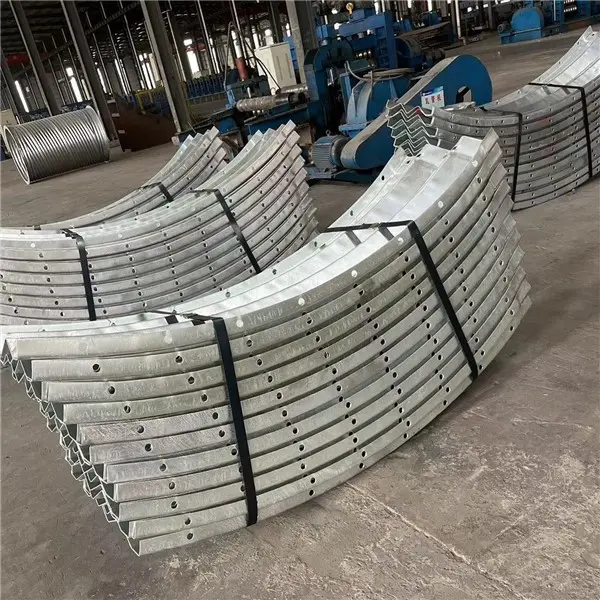
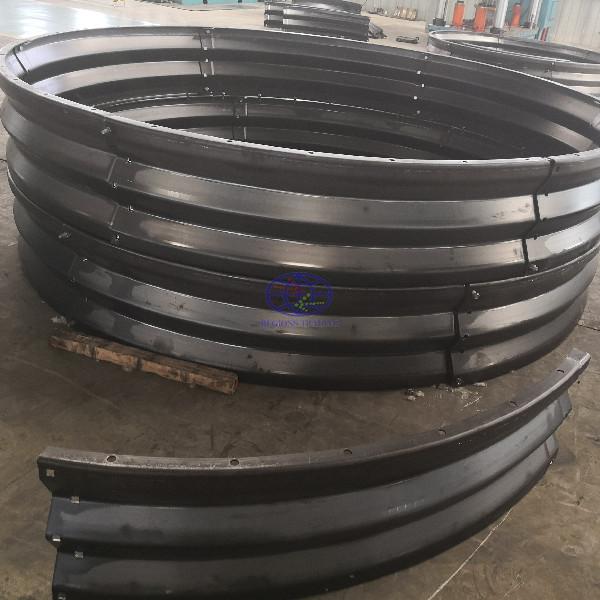
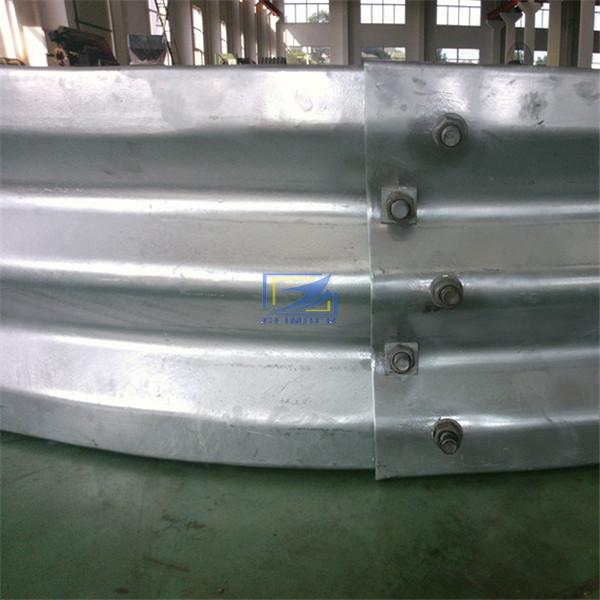
A 2 Flange Tunnel Liner Plate is a specially designed corrugated steel structural plate used for constructing culverts and tunnel liners. The defining characteristic of this system is the presence of two flanges along the longitudinal edges, allowing plates to overlap and form strong bolted connections during assembly.
When installed, these plates create a continuous circumferential corrugation structure, which functions similarly to a corrugated steel culvert pipe. This configuration significantly increases structural stiffness and load-bearing capacity.
The overlapping flange design allows for:
Stronger structural joints
Easier on-site assembly
Enhanced resistance to soil pressure
Improved durability under heavy loads
Because of these features, the 2 Flange Tunnel Liner Plate is widely used in culvert construction, tunnel reinforcement, mining infrastructure, and stormwater drainage systems.
Structural Design of the 2 Flange Tunnel Liner Plate
Corrugated Steel Structure
The most important structural feature of the 2 Flange Tunnel Liner Plate is its corrugated steel profile. Corrugation increases the stiffness of the plate while maintaining relatively low material weight.
Corrugations help distribute external loads evenly across the structure, enabling the liner plate system to handle:
Soil pressure
Vehicle loads
Construction loads
Hydrostatic pressure
This structural efficiency allows engineers to build large underground structures without requiring extremely thick steel plates.
Longitudinal Lap Joint Design
The longitudinal lap joint created by the two flanges ensures a secure connection between plates. During installation, the plates are overlapped and bolted together, forming a tight structural ring.
This design offers several advantages:
Improved joint strength
Better structural integrity
Increased load distribution
Reduced risk of deformation
Once assembled, the liner plate behaves as a continuous corrugated culvert system, delivering exceptional stiffness and durability.
Circumferential Corrugation
Another critical design feature of the 2 Flange Tunnel Liner Plate is its continuous circumferential corrugation. Unlike flat structural plates, the corrugated design enhances resistance against compression and bending forces.
This results in:
Higher structural strength
Increased rigidity
Improved resistance to ground movement
Long-term stability
Because of this performance, 2 Flange Tunnel Liner Plates are often used in high-load infrastructure projects.
Raw Materials and Manufacturing Standards
The quality of a 2 Flange Tunnel Liner Plate largely depends on the steel material and manufacturing process used.
High-Quality Carbon Steel
Qingdao Climber manufactures liner plates using high-quality carbon steel, ensuring reliable structural performance.
Common steel grades include:
Q235B (similar to S235JR)
Q345B (similar to S355JR)
These steels offer excellent mechanical properties, including:
High tensile strength
Good weldability
Strong impact resistance
Reliable performance under heavy loads
Hot-Dip Galvanized Surface Treatment
To ensure long service life in underground environments, the plates undergo hot-dip galvanization.
Typical zinc coating specifications include:
610 g/m² and above
Up to 1200 g/m² for high corrosion environments
The galvanizing process provides:
Superior corrosion resistance
Protection against moisture and chemicals
Extended service life
Reduced maintenance costs
Bitumen Coating During Assembly
In culvert applications, a bitumen coating is often applied during assembly to further enhance corrosion protection and waterproof performance.
This coating helps:
Seal joints
Prevent water infiltration
Increase durability in wet soil conditions
Advantages of 2 Flange Tunnel Liner Plates
1. High Structural Strength
The combination of corrugated steel profiles and flange connections gives the 2 Flange Tunnel Liner Plate excellent structural strength.
It can withstand:
Heavy soil pressure
Highway and railway loads
Construction equipment loads
This makes it ideal for culverts under roads, railways, and embankments.
2. Excellent Load Distribution
The corrugated structure distributes loads efficiently across the entire system.
This means the liner plate works together with surrounding soil to create a soil-steel composite structure, which significantly increases overall strength.
3. Fast and Efficient Installation
Compared with traditional concrete culverts, 2 Flange Tunnel Liner Plates are much faster to install.
Key installation advantages include:
Lightweight modular plates
Simple bolted connections
No heavy lifting equipment required
Reduced construction time
This makes them especially suitable for remote project locations.
4. Adaptability to Complex Ground Conditions
The flexibility of the corrugated steel structure allows the culvert to adapt to ground movement and soil settlement.
This reduces the risk of structural failure and makes liner plates suitable for:
Soft soil areas
Seismic zones
Mining environments
5. Long Service Life
With proper galvanization and protective coatings, 2 Flange Tunnel Liner Plates can last 50–100 years or more, depending on environmental conditions.
This durability significantly reduces maintenance and replacement costs.
Applications of 2 Flange Tunnel Liner Plates
The 2 Flange Tunnel Liner Plate is widely used in various infrastructure projects due to its versatility.
Culvert Construction
One of the most common uses is culvert systems, which allow water to pass beneath roads, railways, or embankments.
Applications include:
Road culverts
Railway culverts
Agricultural drainage culverts
Irrigation channels
Stormwater Drainage Systems
Stormwater management is critical in urban infrastructure. Corrugated liner plates provide efficient drainage systems capable of handling large water volumes.
Typical uses include:
Storm sewers
Flood control structures
Urban drainage systems
Tunnel Reinforcement
Tunnel liner plates are also used to support underground excavations.
Common applications include:
Transportation tunnels
Mining tunnels
Underground passages
Utility tunnels
Bridge and Structural Support
In some cases, liner plates are used to support small bridge structures or underpasses, providing strong load-bearing capacity.
Installation Process of 2 Flange Tunnel Liner Plates
The installation of 2 Flange Tunnel Liner Plates is relatively straightforward compared to traditional concrete structures.
Step 1: Site Preparation
The construction area is prepared by:
Excavating the trench or tunnel
Preparing the foundation
Ensuring proper drainage conditions
Step 2: Plate Assembly
The liner plates are assembled on site by:
Positioning plates in the required configuration
Aligning flanges
Connecting plates using bolts and nuts
The modular design allows workers to assemble structures quickly.
Step 3: Structural Alignment
During installation, the structure must be properly aligned to ensure correct geometry and load distribution.
Step 4: Backfilling
After assembly, soil is carefully backfilled around the structure.
Proper compaction ensures the soil-steel interaction required for maximum structural performance.
For more installation instructions, please see this article: The Ultimate Guide to Tunnel Liner Plate Installation
International Project Experience
Qingdao Climber has supplied corrugated steel culverts and liner plate systems to many international markets, including:
Mongolia
India
Malaysia
Ethiopia
Kenya
Sudan
South Sudan
Australia
Papua New Guinea
Bolivia
These projects demonstrate the adaptability and reliability of 2 Flange Tunnel Liner Plates in various climates and engineering conditions.
Logistics and Modular Design for Overseas Projects
One major advantage of corrugated liner plate systems is their modular design, which is ideal for international shipping.
Benefits include:
Compact packaging
Lower transportation costs
Easy container loading
Efficient on-site assembly
Products can be shipped to any port worldwide, and in some regions door-to-door logistics services can be arranged.
Why Choose Qingdao Climber as Your Supplier?
Choosing the right manufacturer is critical for infrastructure projects. Qingdao Climber offers several advantages:
Extensive Industry Experience
With more than 10 years of experience in corrugated steel culvert manufacturing, the company understands the technical requirements of global infrastructure projects.
Large Production Capacity
The factory can supply approximately 1500 tons of corrugated steel structure products per month, ensuring stable delivery for large projects.
Custom Engineering Solutions
Different projects require different culvert designs. Qingdao Climber provides customized solutions, including:
Various plate profiles
Different diameters
Project-specific designs
Reliable Customer Service
Customer service includes:
Response within 24 hours
Professional technical support
Full process assistance from inquiry to shipment
Customer satisfaction remains the company's top priority.
Please feel free to contact us anytime.
Future Trends in Corrugated Steel Culvert Technology
As infrastructure demand grows globally, corrugated steel liner plate systems will continue to evolve.
Key industry trends include:
Higher corrosion resistance coatings
Larger culvert diameters
Smart monitoring systems
Sustainable steel materials
The 2 Flange Tunnel Liner Plate will remain an essential component in modern infrastructure due to its strength, efficiency, and adaptability.
Conclusion
The 2 Flange Tunnel Liner Plate is a highly efficient structural solution for culverts, tunnels, and drainage systems. Its corrugated steel design, flange connections, and modular installation provide exceptional structural strength, durability, and cost efficiency.
With applications ranging from stormwater drainage systems to transportation infrastructure, this innovative steel liner system plays a crucial role in modern civil engineering.
As a professional manufacturer of corrugated steel structures, Qingdao Regions Trading Co., Ltd (Qingdao Climber) provides reliable and customized 2 Flange Tunnel Liner Plate solutions for global infrastructure projects.
By combining high-quality materials, advanced manufacturing technology, and professional service, Qingdao Climber helps clients build durable and efficient culvert systems for long-term infrastructure success.
View more related products: